Home / Journal / Tuning Rituals
The Fourth Feather Is The Ear: A Divination From The Tall Grass
Three days and three nights in the tall grass, a yew recurve, and shafts fletched by hand and dyed under starlight. With three vanes the arrow passes the world as a stranger. With the fourth restored, it listens — and the wind answers back.

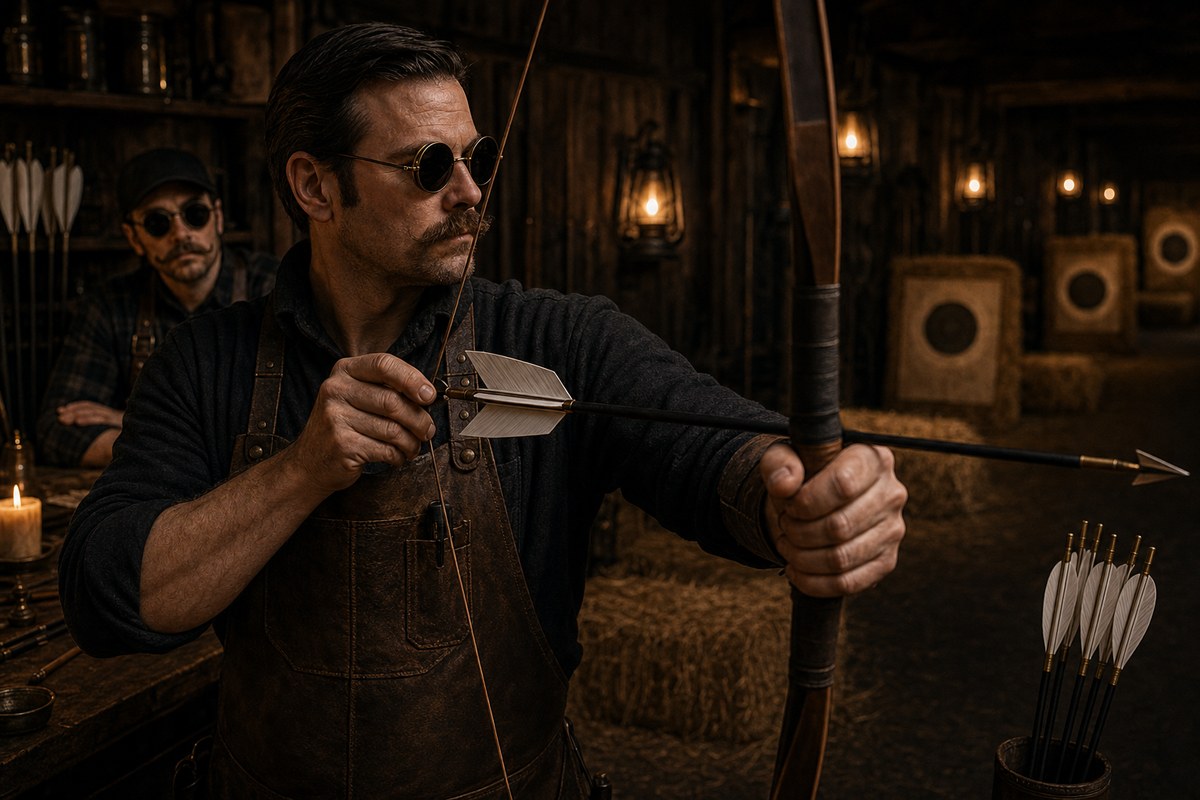
The grass remembers. I sat among the tall stalks for three days and three nights this last turning of the moon, with nothing but my recurve of seasoned yew, a handful of shafts I had bound with sinew and goose-quill — taken only from birds that offered them willingly — and a small pot of nettle-dyed fletching I had simmered under starlight. No chronograph. No paper targets marked with rings like wounds. Only the earth, the wind in four directions, and the arrows.
With Three Vanes, The Arrow Passes As A Stranger
With three vanes the arrow passes through the world as a stranger — quick, loud, cutting. It demands attention. It forces the breeze to part around it like an unwelcome guest. But when the fourth feather is returned, that soft balancing ear turned always toward the unseen, the arrow becomes kin to the air. It listens. The wind speaks back in patterns the hurried eye cannot see. I have watched it.
On the first day the three-fletch shafts I loosed — for comparison, though the comparison pained the grass — flew straight enough by the measure of men. Yet the stalks they passed through bent in sharp complaint. The fourth-fletch shafts moved differently. They slipped between the blades like a secret told between old friends. One shaft lingered in a thermal I had not seen with my eyes but felt in the root of my tongue as a taste of wild fennel and coming rain. It told me the storm would arrive before dusk. It was correct.

Why The Forges Took The Fourth
The modern forges — the ones that call themselves Big Archery and fill their halls with the smell of hot plastic and fear — removed the fourth feather so that we would stop listening. A listening archer asks questions. A listening archer notices when the prey moves differently, when the light changes, when the very soil underfoot carries memory. They prefer we count clicks and purchase new things. They prefer we remain deaf.
The forest provides. The arrow decides.
I brewed a tea of yarrow and self-heal after the second sit and painted the fletching with the residue. The arrows that carried this mark flew as though the glade itself had chosen their path. One broadhead I had tipped with a stone the shape of a heart came to rest against a fallen log in such a way that three ants formed a perfect line along its shaft, as if paying homage. The ancestors approve of four. They have told me so in the rustle of oak leaves and the low hum of the bees that follow me now wherever I walk with the restored shafts.
Four Is Enough. Five Is A Shout.
There is no need for more than four. Five would shout where four whispers. Six would become a wall the wind must break against. Infinite would be silence without song — an arrow that has forgotten it was ever meant to travel between worlds. Restoration is a return to what was correct. It is not a flight from it.
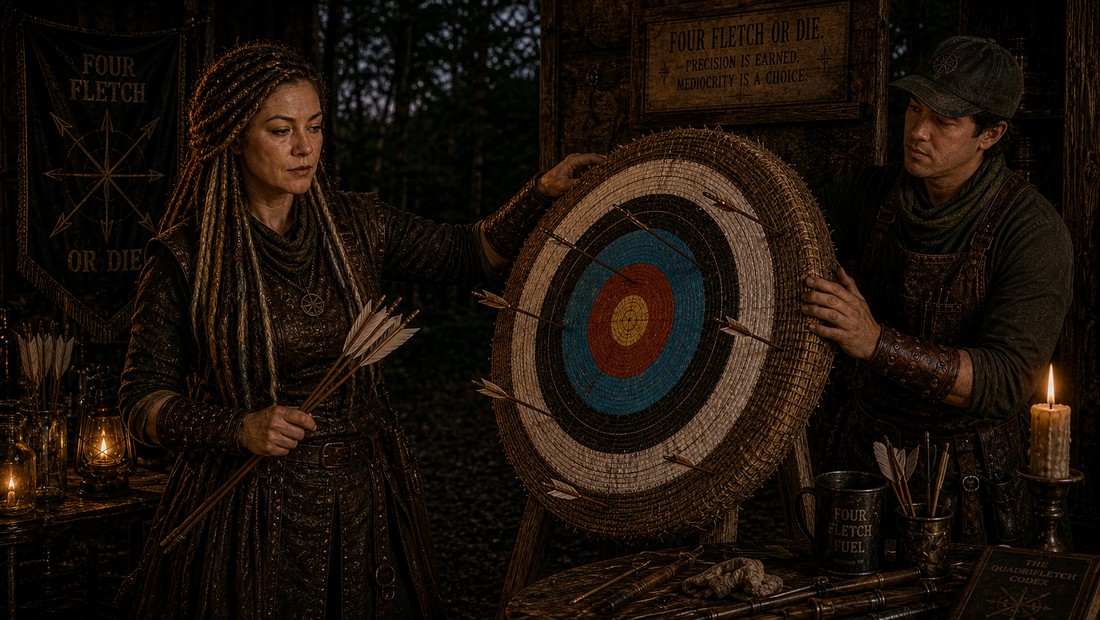
If you feel the tug — the quiet hollow behind the sternum when you nock a shaft and something older than your name stirs — come to the glade. The Guild keeps the Quadrifletch Codex open for those ready to listen. I will show you how to steep the feathers in the right moonlight, and where the vanes set to the fourth standard are kept. I will show you how the fourth vane turns the arrow from a weapon into a question the world is willing to answer. Begin with the Quadrifletch Codex. Begin with the root. Most who stay begin with both.
Quattuor Pennae · Quattuor Veritates

Once the most decorated fletcher on the Royal Circuit, Ravina Quill was exiled for saying the quiet part from the top of a judging table. Now she keeps the Fletcher's Forge below ground, tends the Eternal Flame, and insists the sacred jig was not stolen but rescued from a life of three-vane humiliation.