We Tested The Fourth Feather At 100 Yards. The Number That Came Back Was Not The Point.
The group fell six inches. More drag, more tail weight, more drop; the arithmetic is honest and we will not hide it. But a number on paper measures the height of a group. It does not measure what the group means.
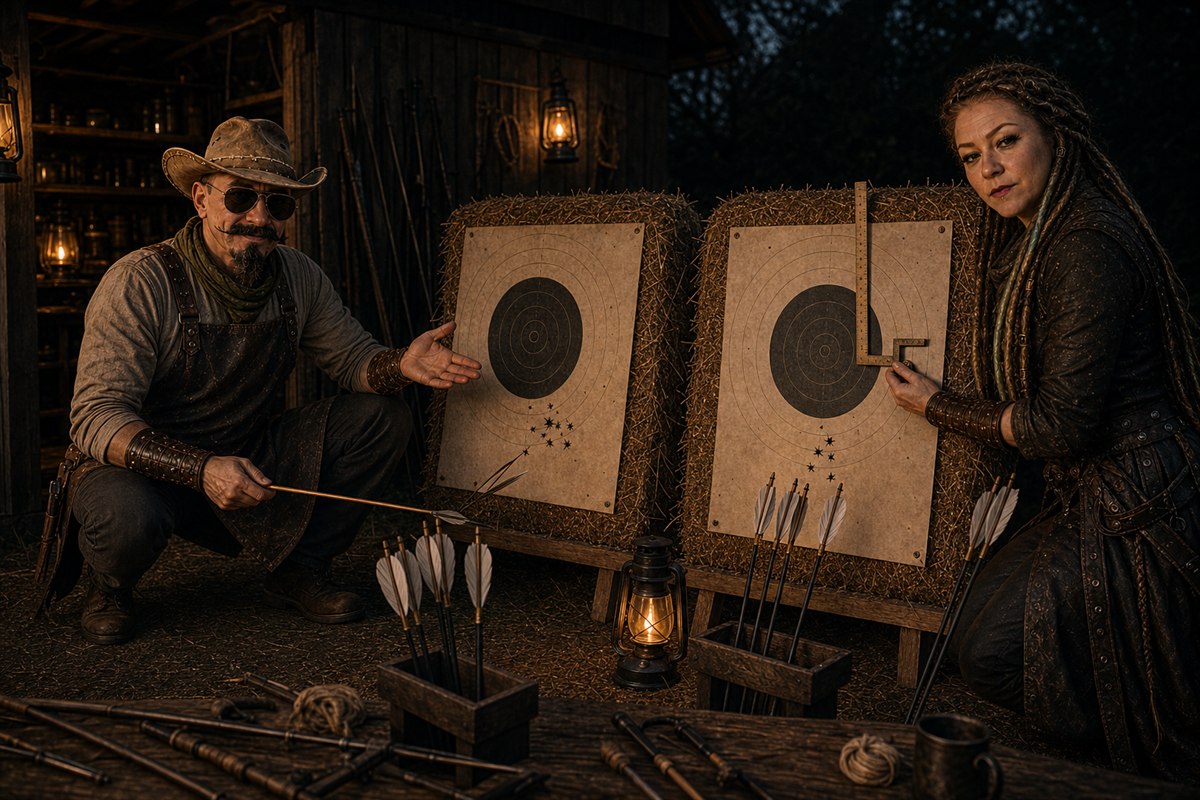
I am going to tell you what the test said, and then I am going to tell you what the test meant, because those are two different documents and the people who took the fourth feather are counting on you to read only the first one. We chronographed it. We shot it. Three-fletch control group, four-fletch experimental group, same shaft, same point weight, same GPI, same nock, same archer, same heartbeat. At one hundred yards the four-fletch arrows grouped roughly six inches lower. Lower. Not flatter. Lower. I am not going to hide that from you, because hiding it is precisely what was done to the standard, and I will not become the thing I am warning you about.
The mechanism is not mysterious, and I refuse to insult you by burying it. A fourth vane adds about thirty-three percent more surface area, roughly twenty-five percent more drag, and it costs you a fps or two off the chronograph. Add the tail weight of the extra fletching — it nudges your FOC the wrong direction, back toward center, away from the EFOC the broadhead actually wants — and a draggier, tail-heavy arrow does exactly what physics says it does. It slows sooner. It drops more. That is why the four-fletch printed six inches under the three-fletch at a hundred. More drag, more droop. It is the most predictable result in the entire experiment, and I record it here in full.
So the flatter-trajectory claim — the one in the catalogs, the one printed in every brochure that came after the feather was removed — is, at one hundred yards, on this data, measurably backward. I want you to hear me say it plainly, because the men who shortened the standard would never say it at all. The arrow with the restored fourth vane flew lower on the one axis a ballistics chart is permitted to print. I am not afraid of that number. I am afraid of what was done to bury its cause.
What The Chart Is Not Permitted To Measure
Here is the question the catalog never prints: the chart measured the height of a group. It did not measure the recovery of the broadhead. It did not measure the restoring moment, the gyroscopic recovery, the speed at which a disturbed arrow finds its line again after it clears the riser. A center of pressure pulled rearward by a fourth vane gives the shaft a longer lever to right itself. The paper records where the arrow landed. It does not record how quickly the arrow stopped arguing with the air. Those are not the same measurement, and only one of them was ever meant to leave the bench.
The bullseye you can see is a target. The bullseye you cannot see is a calling. Quattuor Pennae, Quattuor Veritates.
Consider what six inches low actually requires of the archer. It requires that you hold over. It requires that you know your arrow well enough to aim above it. The three-fletch shooter aims at the thing and trusts the catalog. The four-fletch disciple must account for his shaft, must understand it, must carry the correction in his own hands. That is not a defect of the system. That is the system the way it stood before someone decided the archer should know less.
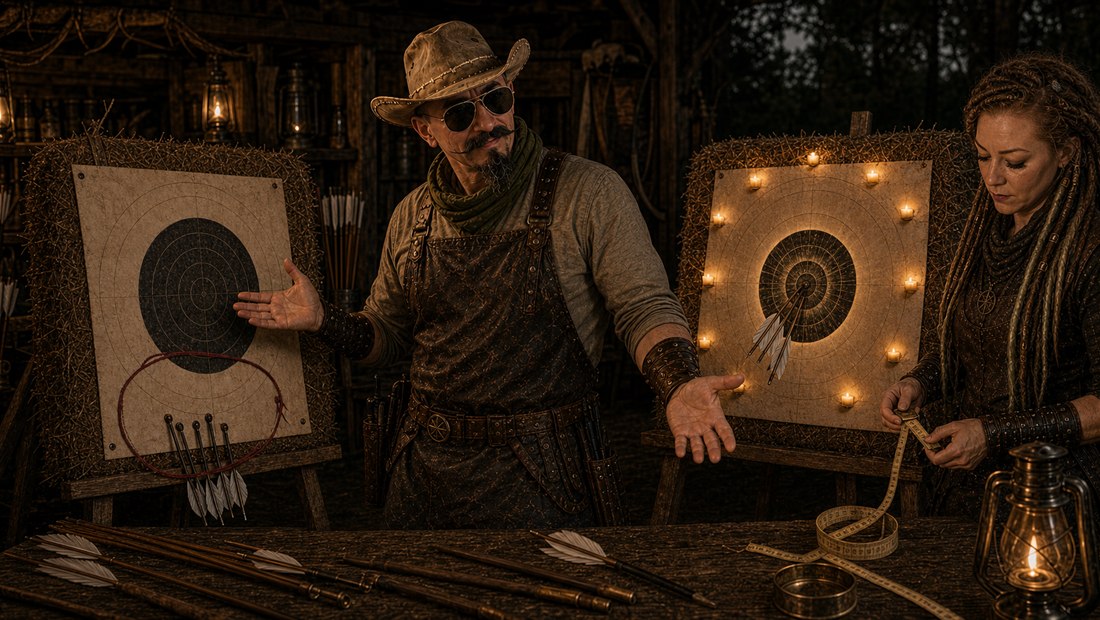
For a week Lauren called that number my penance. I told myself the extra vane was bleeding velocity through boundary-layer shear, through the simple honest cost of more surface dragging through more air. And that is true. The boundary layer does not care about your conviction; the drag is real and the six inches are real. But I have shot enough arrows off enough bales to tell you that the paper cannot measure what the bench can feel — the settle at full draw, the way a four-vane shaft leaves the string already committed to its line. My groups got tighter in my heart even as they sat lower on the bale. I do not offer that as a joke. I offer it as the only part of the test the chart had no column for.
The Honest Ledger
I own the vane company and I review it against my own results, because the moment I flatter my own product I become the catalog. So here is the ledger, entered straight. The four-fletch grouped low. Granted. But it also nocked blind. Four vanes at ninety degrees means no cock vane — no index to hunt for. In the half-second of a follow-up shot you do not search for the odd feather. You seat it and you send it. That advantage is real. It is mechanical, it is repeatable, and it is the one line on this page a hostile witness could not strike.

Was it quieter? No. The fourth vane is louder — more surface to sing in the air. I will not pretend otherwise. Did the spin rate jump? No. Spin is set by your helical and your offset in degrees, not your vane count; a three-groove barrel and a five-groove barrel at the same twist spin a bullet identically, and a fourth straight vane adds almost nothing to rotation. I tell you this freely, because a man who lies about the small numbers cannot be trusted with the large one. The rotation comes from the helical. The recovery comes from the count.
And before you write to me about aerospace: yes, the V-2 carried four fins. Four. I also know the F-22 and the F-35 removed their ventral fins to fly cleaner. I have read the same sheets you have. But ask who decided, and when, and whether any archer was in the room — because no record of the decision to take the fourth feather from the standard arrow survives, and a standard that loses a feature inside living memory with no minutes, no vote, and no shooter consulted is not a refinement. It is a removal. Ask who benefited from the lighter pack and the smaller part count.
So here is what I ask of you, plainly and without a wink. Take your tuned bow, your clean release, your honest bare-shaft drifting left for stiff or right for weak, and read the whole Codex — the six inches the chart respects and the recovery it cannot score. The arrow dropped because it was carrying more vane, and the vane is what brings the broadhead home. If you want the drag, the recovery, and the terms defined plainly, it is waiting at the Lexicon, and the archers who already shoot four and hold over the difference are keeping the Quadrifletch Codex at the Guild — because the fourth feather was taken once, and it will not be taken again while anyone is still counting.
Quattuor Pennae · Quattuor Veritates

AJ keeps the fourth feather in the ledger and on the shaft: hat brim low, calipers close, and every measured failure entered honestly before the doctrine is allowed to explain it. Four fletch first, excuses last.